Foundation Repair Clearwater

Foundation Repair Clearwater: water drives most structural problems along the Pinellas coast. Heavy rain, shallow aquifers, and flat coastal lots create hydrostatic pressure, soil loss, slab cracking, wall movement, and damaged interior finishes. Act early—small signs turn into bigger repairs over time.
1) Why Foundation Issues Are Common in Clearwater
- Storm-driven rainfall: Tampa Bay/Pinellas averages ~50+ inches/year, with intense events that quickly load soils.
- Coastal surge & king tides: surge and seasonal high tides raise surrounding water levels and hold water near slabs.
- Shallow water table: coastal aquifers respond to rain/tides, elevating pore pressure at foundations.
- Lot drainage: flat grading and short downspouts concentrate runoff at slab edges and footings.
Local resources:
Pinellas County Flood Info & Maps ·
City of Clearwater: Stormwater & Flooding ·
USGS Florida groundwater ·
NWS Tampa climate report
2) How Water Damages Foundations (Mechanisms)
- Hydrostatic pressure: saturated soils push laterally on block/concrete walls → cracking, bowing, seepage.
- Soil erosion & piping: runoff removes fines → hidden voids → differential settlement of slabs/footings.
- Uplift & heave: rising groundwater increases upward forces → floor movement, tile/pop.
- Moisture migration: vapor through slabs/joints → efflorescence, cupping wood, mold/humidity.
See FEMA’s guidance on hydrostatic forces and compliant flood openings:
NFIP Technical Bulletin 1.
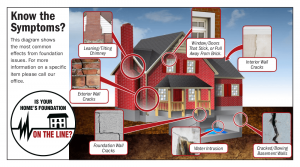
3) Foundation Damage Warning Signs in Clearwater
Interior (1–7 quick checks)
- Doors/windows stick or won’t latch
- Cracks in floors, drywall, or ceilings
- Uneven or sloping floors
- Baseboards/crown pulling away
- Water stains, musty odors, or visible mold
- Efflorescence on tile/concrete
- Bowing/leaning interior walls
Exterior (1–7 ground checks)
- Foundation/brick/stucco cracks
- Gaps around doors/windows
- Tilting chimney or garage columns
- Standing/flowing water near the slab after rain
- Negative grade toward the house
- Spalling/chipping concrete along slab edges
- Mildew growth at the base of walls
If you note 2+ items on any list, schedule a professional inspection.
4) Timeline of Damage Progression
- 0–24 hours: heavy rain elevates soil moisture; hydrostatic pressure spikes against walls.
- 1–7 days: damp spots, hairline cracking, doors begin to bind; ponding at slab edges.
- 30–90 days: settlement/heave becomes measurable; finishes deteriorate; musty odors increase.
- 6–12 months: structural movement “locks in”; repair scope and cost escalate.
5) Our Engineered Solutions (Clearwater)
- Piering systems: stabilize footings, bridge voids, and control settlement.
- Pressure grouting: fill subsurface voids and densify weak soils under slabs/walls.
- Drainage engineering: regrade, extend downspouts, add perimeter drains, and route discharge away from the foundation.
- Waterproofing assemblies: membranes/coatings, interior channels, sump systems, and vapor control to protect slabs, walls, and interior finishes.
Learn more:
Drainage Problems (design & fixes) ·
Foundation Waterproofing (service) ·
Basement Waterproofing
6) Why Choose Foundation Waterproofing 101 (Clearwater)
- 22+ years solving water-driven structural issues
- Water Hydraulics expertise—engineered drainage + stabilization, not band-aids
- Hundreds of local projects across Clearwater & Pinellas County
- Lifetime transferable warranty for long-term value and easier disclosure at resale
7) Request Your Free Foundation Repair Inspection
- Call (813) 614-4830 or book online
- We inspect drainage, grading, and structure; map moisture and movement
- Receive a written plan with photos and a lifetime-warranty proposal
Additional reading:
USGS groundwater (FL) ·
Pinellas County Flood Info ·
City of Clearwater Flooding ·
NWS Tampa climate
Foundation Repair Clearwater — FAQs
Why are foundation issues common in Clearwater?
- Storm-driven rainfall: Tampa Bay and Pinellas average over 50 inches per year with intense events that quickly load soils.
- Coastal surge & king tides: seasonal high tides and surge raise surrounding water levels and hold water near slabs.
- Shallow water table: coastal aquifers respond rapidly to rain and tides, elevating pore pressure at foundations.
- Lot drainage: flat grading and short downspouts concentrate runoff at slab edges and footings.
How does water damage foundations?
- Hydrostatic pressure: saturated soils push laterally on block/concrete walls causing cracking, bowing, and seepage.
- Soil erosion & piping: runoff removes fines leading to hidden voids and differential settlement of slabs/footings.
- Uplift & heave: rising groundwater increases upward forces causing floor movement and tile popping.
- Moisture migration: vapor through slabs/joints leads to efflorescence, cupping wood, mold, and humidity.
What are the warning signs of foundation damage in Clearwater?
Interior (1–7 quick checks)
- Doors/windows stick or won’t latch
- Cracks in floors, drywall, or ceilings
- Uneven or sloping floors
- Baseboards/crown pulling away
- Water stains, musty odors, or visible mold
- Efflorescence on tile/concrete
- Bowing/leaning interior walls
Exterior (1–7 ground checks)
- Foundation/brick/stucco cracks
- Gaps around doors/windows
- Tilting chimney or garage columns
- Standing/flowing water near the slab after rain
- Negative grade toward the house
- Spalling/chipping concrete along slab edges
- Mildew growth at the base of walls
If you note 2+ items on any list, schedule a professional inspection.
What is the timeline of damage progression?
- 0–24 hours: heavy rain elevates soil moisture; hydrostatic pressure spikes against walls.
- 1–7 days: damp spots, hairline cracking, doors begin to bind; ponding at slab edges.
- 30–90 days: settlement/heave becomes measurable; finishes deteriorate; musty odors increase.
- 6–12 months: structural movement “locks in”; repair scope and cost escalate.
What engineered solutions do you provide in Clearwater?
- Piering systems: stabilize footings, bridge voids, and control settlement.
- Pressure grouting: fill subsurface voids and densify weak soils under slabs/walls.
- Drainage engineering: regrade, extend downspouts, add perimeter drains, and route discharge away from the foundation.
- Waterproofing assemblies: membranes/coatings, interior channels, sump systems, and vapor control to protect slabs, walls, and interior finishes.
Do you offer free foundation inspections in Clearwater?
- Call (813) 614-4830 or book online.
- We inspect drainage, grading, and structure; map moisture and movement.
- Receive a written plan with photos and a lifetime-warranty proposal.