Commercial Waterproofing
Commercial waterproofing for hotels, hospitals, schools, offices, retail, warehouses and parking structures. We stop water-driven damage to slabs, walls and elevator pits without shutting the building down.
Hospitality ◆ Healthcare ◆ Office ◆ Retail
Why Commercial Waterproofing Matters in Florida
- Storm load on soils. Intense downpours raise water pressure around walls, slabs, footings, elevator pits and low areas.
- Shallow groundwater. The water table responds quickly to rain, tides and the wet season.
- Flat, low sites. Water holds at the footing line when there is nowhere for it to go.
- Roof water. Large commercial roofs dump thousands of gallons at the foundation in one storm.
- Vapor and flooring. Moisture through slabs brings efflorescence, adhesive failure, humidity and mold complaints.
Florida commercial water, by the numbers
Commercial buildings are big, heavy and full of people and equipment. Water does not care.
80.29 in.
Rain in Tampa’s wettest year on record.
2,494 gal.
Water off 4,000 sq ft of roof in one inch of rain. Commercial roofs are many times bigger.
62.4 lb.
Upward push per square foot for every foot of groundwater above the slab bottom.
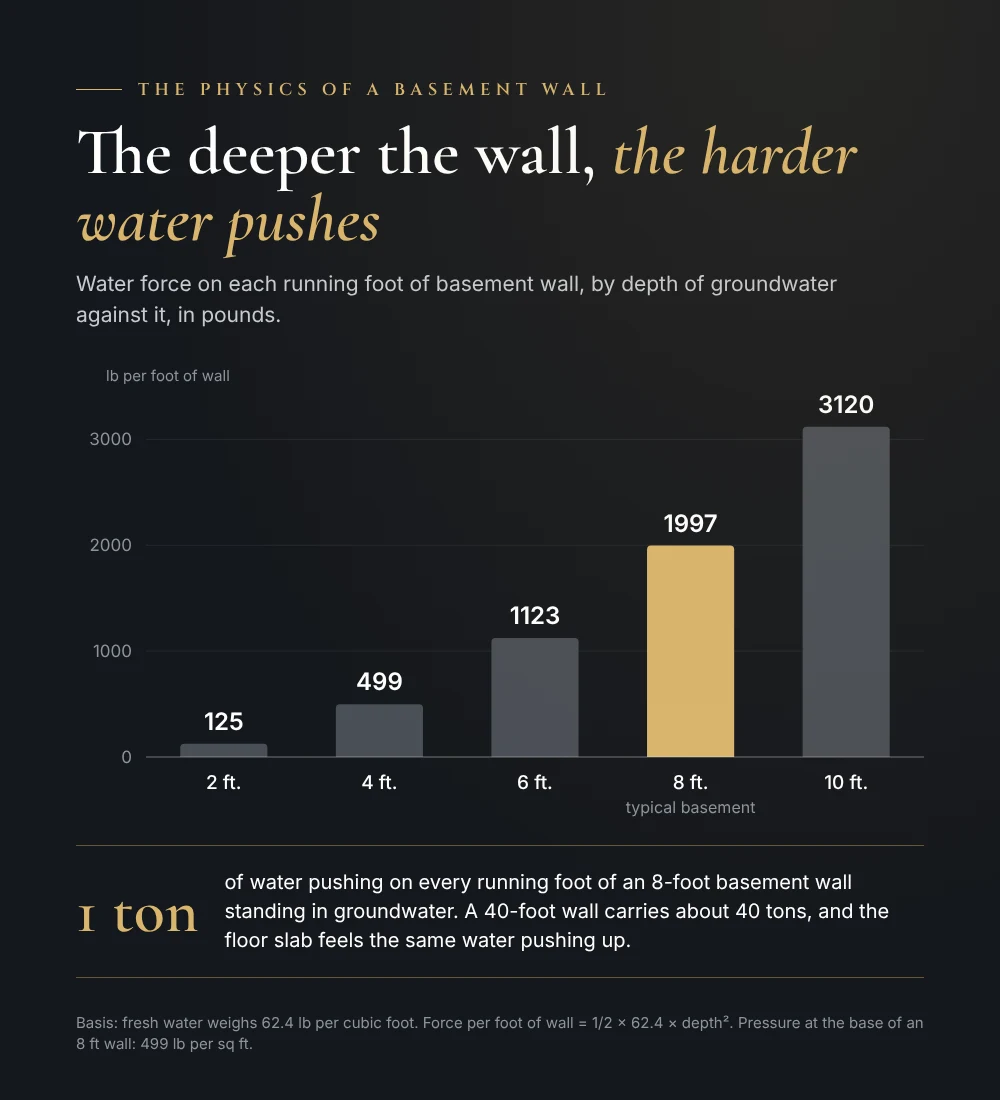
1 ton
Water force on each running foot of an 8-foot below-grade wall in groundwater.
Sources: Bay News 9; roof runoff at 0.623 gal per sq ft per inch; water at 62.4 lb per cubic foot.
How Water Damages Commercial Foundations
- Hydrostatic pressure: saturated soil pushes on CMU and concrete walls, causing cracking, bowing and seepage.
- Soil erosion and piping: runoff carries fines from under slabs and footings, leaving voids and settlement.
- Uplift: rising groundwater pushes up on slabs, moving floors and separating joints.
- Vapor migration: moisture through slabs and joints brings flooring failures, efflorescence, humidity and mold complaints.
- Detail failures: penetrations, cold joints, elevator pits, planters and expansion joints leak when not waterproofed as one system.
Priority Areas to Waterproof in Commercial Buildings
Below-Grade & Slab-on-Grade
- Basement, retaining and stem walls, and under-slab membranes
- Elevator pits, sump wells and equipment rooms
- Cold joints, expansion joints and MEP penetrations
- Loading docks, trash rooms and service corridors
- Lobbies, storefronts and entries in flood-prone areas
- Foundation edges at roof discharge and low spots
Above-Grade & Envelope
- Podium, plaza and parking decks over occupied space
- Planters over occupied space
- Balconies and elevated slabs
- Expansion joints and deck terminations
- Wall-floor joints at grade
- Concrete exposed to salt air and moisture
Our Commercial Waterproofing Systems
Chosen for the building, the groundwater and how the property has to keep operating.
Exterior Wall Waterproofing
Sheet membranes, bentonite, liquid-applied barriers, protection boards and drainage composites.
Under-Slab Vapor Control
Vapor retarders with taped seams, turn-ups and sealed penetrations to protect flooring and finishes.
Interior Drainage & Sumps
Collection channels, sump systems, backup power and backflow prevention, with protected discharge.
Crystalline & Negative-Side
Admixtures and negative-side treatments where excavation is limited or the building cannot close.
Joints & Penetrations
Waterstops, hydrophilic strips, injection, penetration boots and repair detailing.
Deck & Plaza Systems
Traffic-rated deck coatings and plaza and podium waterproofing.
Timeline of Commercial Water Damage Risk
0 to 24 Hours
Storm rain raises soil moisture, wall pressure spikes and seepage appears at joints and penetrations.
1 to 7 Days
Ponding at slab edges, hairline cracks, damp finishes and odors.
30 to 90 Days
Measurable settlement or heave, flooring failures and visible efflorescence.
6 to 12 Months
Movement becomes established, and downtime, tenant disruption and repair cost grow.
Our Commercial Waterproofing Workflow
Assess
Site drainage, elevations, slab conditions, wall details and waterproofing history.
Investigate
Seepage paths, vapor behavior, slab moisture, cracks, joints and penetrations.
Design
Waterproofing, drainage, vapor control and discharge chosen for the actual conditions.
Install
Sequenced with ownership, management and tenants to keep the building operating.
Document
Photos, details and warranty records for the owner and future buyers.
Structural Repair & Reinforcement Options
When water has already damaged the structure, waterproofing is paired with repair: crack injection, concrete restoration, carbon fiber reinforcement, spalling repair and, where the foundation has moved, piers and pressure grouting. Engineering, when a project calls for it, is provided by Foundation Masters, LLC, Florida Certificate of Authorization CA# 30969.
Commercial Building Types We Waterproof
Hotels & Resorts
Lobbies, pool terraces, garages and back-of-house, with guests in the building.
Hospitals & Medical
Sensitive equipment, infection control and no shutdowns.
Schools & Institutions
Work scheduled around the academic calendar.
Offices & High-Rises
Below-grade garages, elevator pits and podium decks.
Retail & Mixed-Use
Storefronts, slabs and loading docks, with stores open.
Warehouses & Industrial
Slab moisture, docks and equipment pits.
Also parking garages, podium decks and select multifamily buildings, through their property managers.
Why Choose Foundation Waterproofing 101 for Commercial Waterproofing
Commercial owners and managers need the water stopped without shutting the building down. We find the real source, design the system around how the property operates, and document every step. Every installation is backed by our lifetime transferable warranty. Engineering, when a project calls for it, is provided by Foundation Masters, LLC, Florida Certificate of Authorization CA# 30969.
Related Foundation Repair & Drainage Services
Commercial Waterproofing Florida: FAQs
Why do Florida commercial buildings need waterproofing?
Heavy rain, shallow groundwater and flat, low sites put hydrostatic pressure on slabs, walls and elevator pits. Left alone it leads to leaks, slab moisture, flooring failures and structural deterioration.
What commercial areas are most vulnerable to water intrusion?
Elevator pits, parking garages, slab edges, loading docks, mechanical and storage rooms, below-grade walls, wall-floor and construction joints, plaza decks, planters and entrances.
Can waterproofing be combined with drainage repair?
Yes. Waterproofing works best with drainage correction, hydrostatic relief, sump discharge and site water management designed together.
Can water intrusion cause structural damage?
Yes. Long-term intrusion causes soil erosion, slab movement, settlement, wall cracking, concrete deterioration, corrosion of embedded steel and interior damage.
Do you waterproof hotels, medical buildings and commercial facilities?
Yes. Hotels, hospitals and medical offices, schools, offices, retail, warehouses, parking garages and high-rise structures, scheduled to keep the building operating.
Do you offer commercial waterproofing inspections?
Yes. Call 813-614-4830 or send the form below. We inspect intrusion paths, drainage, slab moisture, wall leakage, groundwater pressure and foundation conditions before recommending a plan.
Request a Commercial Waterproofing Assessment
Elevator pits, garages, slabs, walls or decks taking on water: call 813-614-4830 or send the form below.