Foundation Repair Lakeland

Foundation Repair Lakeland: water drives most structural problems in Lakeland and Polk County. Seasonal storms, shallow aquifers, sandy soils, fill conditions, flat lots, and poor drainage can raise hydrostatic pressure, cause soil loss, crack slabs, shift walls, and damage interior finishes. Act early because small signs often grow into larger and more expensive repairs over time.
1) Why Foundation Issues Are Common in Lakeland
- Storm rainfall: intense downpours rapidly load soils and pond water near slab edges, stem walls, and low areas around the structure.
- Shallow water table: seasonal groundwater spikes can increase pore pressure beneath slabs and footings.
- Sandy soils and fill: loose soils can erode, consolidate, and form hidden voids under concrete when runoff is not controlled.
- Lot drainage: flat grades, short downspouts, clogged drains, and negative grading can concentrate runoff against foundations.
Local resources:
City of Lakeland Flood Prevention ·
Polk County Flood Zone Viewer ·
SWFWMD Flooding & Floodplains ·
NWS Tampa Local Climate ·
USGS Water Data Florida
2) How Water Damages Foundations
- Hydrostatic pressure: saturated soils push laterally on block and concrete walls, causing cracking, bowing, seepage, and movement.
- Soil erosion and piping: runoff removes fines, creates hidden voids, and causes differential settlement of slabs and footings.
- Uplift and heave: rising groundwater increases upward forces beneath slabs, causing floor movement, cracked tile, and finish damage.
- Moisture migration: vapor moving through slabs, joints, and wall systems can cause efflorescence, cupping wood floors, mold, and elevated humidity.
Many Lakeland foundation issues begin as drainage and groundwater problems. Review our Drainage Problems Sarasota and Drainage Problems Orlando pages for examples of how water movement affects structural performance across Florida properties.
3) Foundation Damage Warning Signs in Lakeland
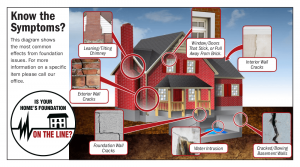
Interior Warning Signs
- Doors or windows stick or will not latch
- Cracks appear in floors, drywall, ceilings, or tile
- Floors feel uneven, soft, or sloped
- Baseboards, crown molding, or trim pull away from walls
- Water stains, musty odors, or visible mold appear indoors
- Efflorescence appears on tile, concrete, block, or masonry
- Interior walls appear bowed, leaning, or cracked
Exterior Warning Signs
- Foundation, brick, block, stucco, or slab-edge cracks
- Gaps around doors, windows, garage openings, or trim
- Tilting chimney, porch columns, or garage columns
- Standing or flowing water near the slab after rain
- Negative grade directing water toward the house
- Spalling, chipping, or deterioration along concrete edges
- Mildew, staining, or algae growth at the base of exterior walls
If you note 2+ items on any list, schedule a professional inspection.
4) Timeline of Damage Progression
- 0–24 hours: storm rainfall elevates soil moisture and hydrostatic pressure spikes against walls.
- 1–7 days: damp spots, hairline cracking, door binding, and ponding at slab edges may appear.
- 30–90 days: settlement or heave can become measurable; finishes deteriorate and musty odors increase.
- 6–12 months: structural movement can become more pronounced, increasing the repair scope and cost.
5) Our Engineered Solutions in Lakeland
- Piering systems: stabilize footings, bridge voids, and control settlement.
- Pressure grouting: fill subsurface voids and densify weak soils under slabs, walls, and footings.
- Drainage engineering: regrade, extend downspouts, add perimeter drains, and route discharge away from the foundation.
- Waterproofing assemblies: membranes, coatings, interior channels, sump systems, and vapor control protect slabs, walls, and interior finishes.
- Carbon fiber reinforcement: strengthen concrete, masonry, beams, columns, slabs, and structural components where cracking or movement requires reinforcement. Learn more about our Carbon Fiber Structural Repairs.
Related services:
Drainage Problems Sarasota ·
Drainage Problems Orlando ·
Foundation Waterproofing ·
Basement Waterproofing ·
Commercial Waterproofing ·
Commercial Waterproofing Orlando
6) Nearby Foundation Repair Service Areas
Foundation Waterproofing 101 provides engineered foundation repair, drainage correction, waterproofing, and structural stabilization throughout Lakeland, Polk County, and nearby Florida markets. If your property is outside Lakeland, visit one of our nearby service-area pages:
8) Why Choose Foundation Waterproofing 101 in Lakeland?
- 22+ years solving water-driven structural issues
- Water Hydraulics expertise — engineered drainage and stabilization, not band-aids
- Hundreds of local projects across Polk County and surrounding Florida markets
- Lifetime transferable warranty for long-term value and easier disclosure at resale
9) Request Your Free Foundation Repair Inspection
- Call (813) 614-4830 or book online.
- We inspect drainage, grading, structure, moisture, and movement.
- Receive a written plan with photos and a lifetime-warranty proposal.