“`html
Commercial Waterproofing Miami

Commercial Waterproofing Miami protects offices, hospitals, hotels, schools, warehouses, parking garages, multifamily buildings, retail centers, high-rise structures, and industrial properties from water-driven damage. Miami’s storm rainfall, Biscayne Aquifer groundwater, coastal surge, king tides, porous limestone, and flat low-elevation sites can raise hydrostatic pressure, erode soils, crack slabs, displace walls, damage finishes, and disrupt business operations.
Foundation Waterproofing 101 designs commercial waterproofing systems that control water at the source, relieve pressure, protect structural components, and reduce long-term repair costs.
1) Why Commercial Waterproofing Matters in Miami
Miami commercial buildings face water from multiple directions. Rainfall loads the site from above, groundwater rises from below, and tidal influence can reduce the ability of water to drain away. For commercial properties, this creates serious risk for slabs, foundation walls, elevator pits, parking garages, mechanical rooms, loading areas, storage rooms, lobbies, and occupied interior spaces.
- Storm rainfall: frequent downpours quickly load soils, raise water pressure, and overwhelm drainage systems.
- Biscayne Aquifer: shallow groundwater can respond to rain and tides, increasing pore pressure beneath slabs and around elevator pits.
- Coastal surge & king tides: tidal events can hold water at slab edges, low entries, garages, and underground spaces.
- Porous limestone: subsurface water can move through limestone and create hidden pressure below the building.
- Flat and low sites: poor slope, short discharge paths, and limited gravity drainage keep water near the footing line.
Local resources:
Miami-Dade Flood Zone Maps ·
Miami Beach King Tides ·
USGS Groundwater Florida ·
NWS Miami
2) How Water Damages Commercial Foundations & Interiors
- Hydrostatic pressure: saturated soils push laterally on CMU, concrete, retaining walls, basement walls, and below-grade structures.
- Soil erosion & piping: moving water carries fines away from slabs and footings, creating hidden voids and differential settlement.
- Uplift & heave: rising groundwater increases upward force beneath slabs, causing cracking, tile popping, joint separation, and floor movement.
- Vapor migration: moisture moves through slabs and joints, damaging flooring systems, adhesives, coatings, and interior finishes.
- Detail failures: elevator pits, penetrations, cold joints, expansion joints, planters, podium decks, and parking structures can leak without correct detailing.
- Structural deterioration: chronic water exposure can accelerate concrete deterioration, corrosion, wall movement, and structural cracking.
3) Priority Areas to Waterproof in Miami Commercial Buildings
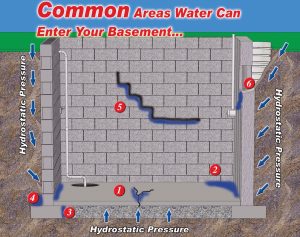
Below-Grade & Slab-on-Grade Areas
- Foundation walls, basement walls, and retaining walls
- Elevator pits, lift shafts, sump wells, and mechanical pits
- Slab edges, wall-floor joints, and construction joints
- Loading docks, trash rooms, storage rooms, and wet utility rooms
- Parking garages and podium decks over occupied spaces
- At-grade lobbies, storefronts, entries, and flood-pathway doors
- Pipe penetrations, electrical conduits, and MEP openings
Above-Grade / Envelope Areas
- Roof decks and plaza decks
- Planters over occupied space
- Parapets, coping, and façade control joints
- Window and door systems at grade
- Wall penetrations and utility entries
- Stair towers, exterior landings, and garage transitions
4) Our Commercial Waterproofing Systems
Foundation Waterproofing 101 designs waterproofing systems around the building type, water source, soil conditions, groundwater behavior, and business-use requirements. Miami commercial waterproofing often requires more than one product. A complete system may include waterproofing, drainage, pressure relief, sump discharge, structural repair, and long-term monitoring access.
- Exterior waterproofing: sheet membranes, bentonite systems, liquid-applied barriers, protection board, and drainage composites.
- Under-slab protection: vapor retarders, taped seams, turn-ups, terminations, and slab moisture-control details.
- Interior drainage: channels, sump systems, pressure-relief paths, and protected discharge routing.
- Hydrostatic pressure relief: systems designed to reduce groundwater pressure beneath slabs and around below-grade areas.
- Joint and penetration detailing: waterstops, hydrophilic strips, injection ports, penetration boots, and sealant systems.
- Surface protection: traffic-rated coatings, deck coatings, plaza waterproofing, and parking garage protection.
- Structural reinforcement: carbon fiber, concrete repair, wall stabilization, and reinforcement where water damage has weakened structural components.
Learn more:
Foundation Repair Miami ·
Drainage Problems Miami ·
Foundation Waterproofing ·
Carbon Fiber Structural Repairs
5) Miami Commercial Building Types We Waterproof
Commercial waterproofing in Miami must account for building use, downtime, tenant access, equipment sensitivity, code exposure, and long-term maintenance. Foundation Waterproofing 101 evaluates the property as a complete water-management system.
- Hotels and hospitality properties
- Hospitals, medical offices, and healthcare facilities
- Schools and institutional buildings
- Multifamily buildings, condominiums, and apartment complexes
- Retail centers and mixed-use buildings
- Warehouses, industrial buildings, and storage facilities
- Parking garages, podium decks, and below-grade structures
- Office buildings and high-rise structures
6) Timeline of Risk Escalation
- 0–24 hours: storm rainfall elevates soil moisture and wall pressure spikes around slabs and foundations.
- 1–7 days: ponding at slab edges, damp finishes, odor, hairline cracks, and minor seepage may appear.
- 30–90 days: settlement, heave, flooring failures, efflorescence, and tenant complaints become more likely.
- 6–12 months: structural movement can become established, increasing downtime, repair scope, and cost.
8) Why Choose Foundation Waterproofing 101 for Commercial Waterproofing in Miami
- 22+ years delivering waterproofing, drainage, and foundation repair solutions in Florida
- Water Hydraulics expertise for groundwater, pressure, discharge, and structural water-control systems
- Miami-specific experience with high water tables, porous limestone, storm flooding, surge, and king tide conditions
- Minimal downtime planning for hotels, offices, medical buildings, warehouses, multifamily buildings, and commercial facilities
- Warranty & documentation with clear scopes, photos, repair plans, and transferable coverage where applicable
9) Request a Commercial Waterproofing Assessment
If your Miami commercial property has slab seepage, elevator pit water, garage flooding, foundation wall leaks, drainage failure, mold odor, coating failure, hydrostatic pressure, or recurring moisture damage, Foundation Waterproofing 101 can inspect the property and recommend a repair plan.
- Call (813) 614-4830 or request an inspection online
- We inspect drainage, grading, slab conditions, wall details, water entry points, and moisture behavior
- Receive a written plan, photos, repair scope, and turnkey proposal with warranty options
Commercial Waterproofing Miami — FAQs
Why do Miami commercial buildings need waterproofing?
Miami commercial buildings need waterproofing because heavy rainfall, shallow groundwater, the Biscayne Aquifer, porous limestone, storm surge, king tides, and flat low-elevation sites can create hydrostatic pressure, slab moisture, wall leaks, elevator pit water, and structural deterioration.
What commercial areas are most vulnerable to water intrusion?
Common vulnerable areas include elevator pits, parking garages, slab edges, loading docks, mechanical rooms, storage rooms, below-grade walls, wall-floor joints, construction joints, roof decks, plaza decks, planters, and building entrances.
Can waterproofing be combined with drainage repair?
Yes. In Miami, waterproofing often works best when combined with drainage correction, hydrostatic pressure relief, sump discharge, foundation drainage, and site water-management improvements.
Can water intrusion cause structural damage?
Yes. Long-term water intrusion can cause soil erosion, slab movement, foundation settlement, wall cracking, concrete deterioration, corrosion of embedded steel, mold risk, and interior finish damage.
Do you waterproof hotels, multifamily buildings, and commercial facilities?
Yes. Foundation Waterproofing 101 evaluates and repairs waterproofing problems for hotels, multifamily buildings, offices, warehouses, medical buildings, retail centers, parking garages, high-rise structures, and other commercial facilities.
Do you offer commercial waterproofing inspections in Miami?
Yes. Call (813) 614-4830 or book online. Foundation Waterproofing 101 inspects water intrusion, drainage, grading, slab moisture, wall leakage, groundwater pressure, and foundation conditions before recommending a repair plan.
“`